Published rubrics
Every criterion and weight is readable before you submit. Nothing is scored that was not announced.
About StudAI Foundry
Foundry is a structured AI innovation platform where builders move from a meaningful real-world problem to a validated solution blueprint, a working prototype and a physical final — with evaluated feedback at every step.
What Foundry Is
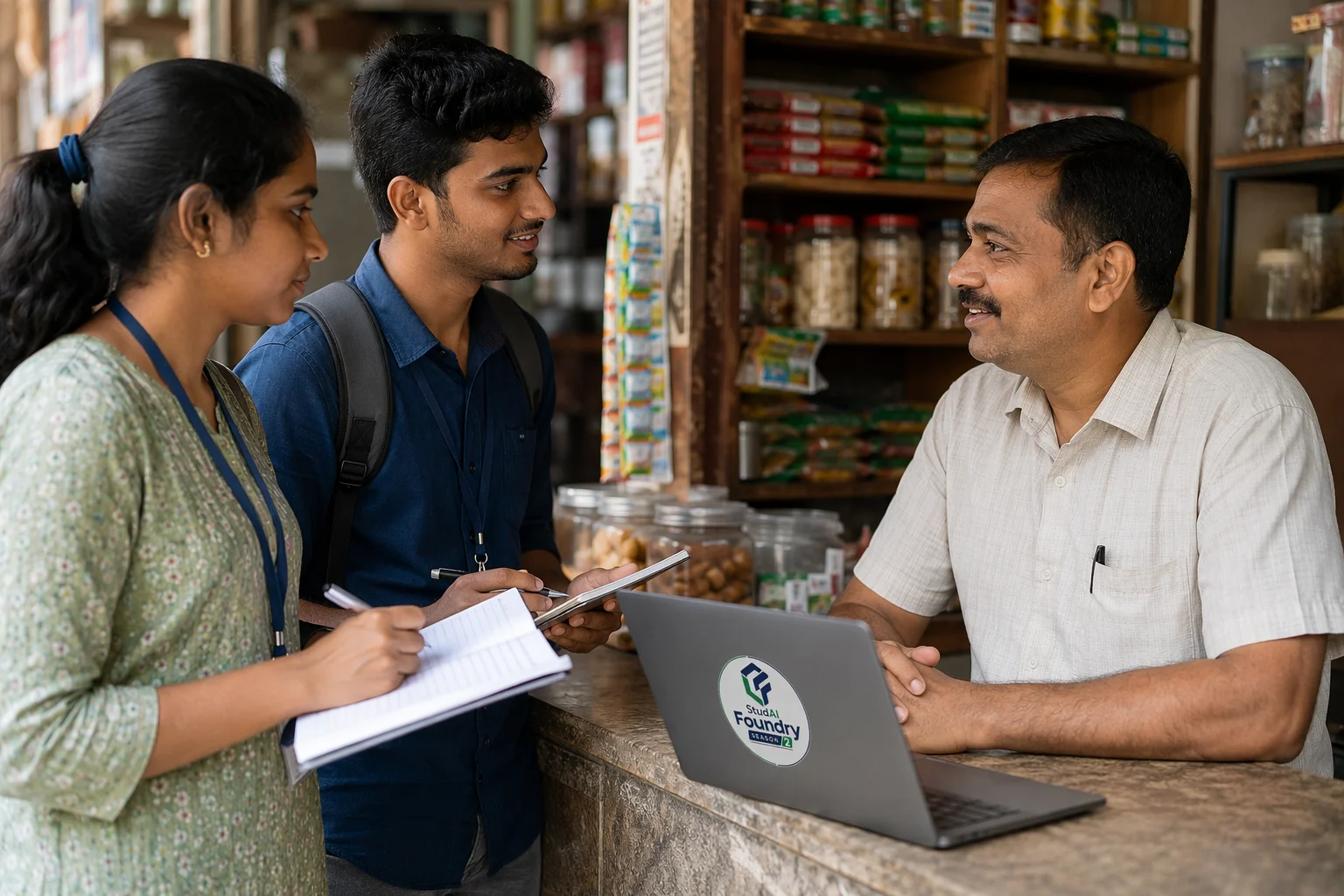
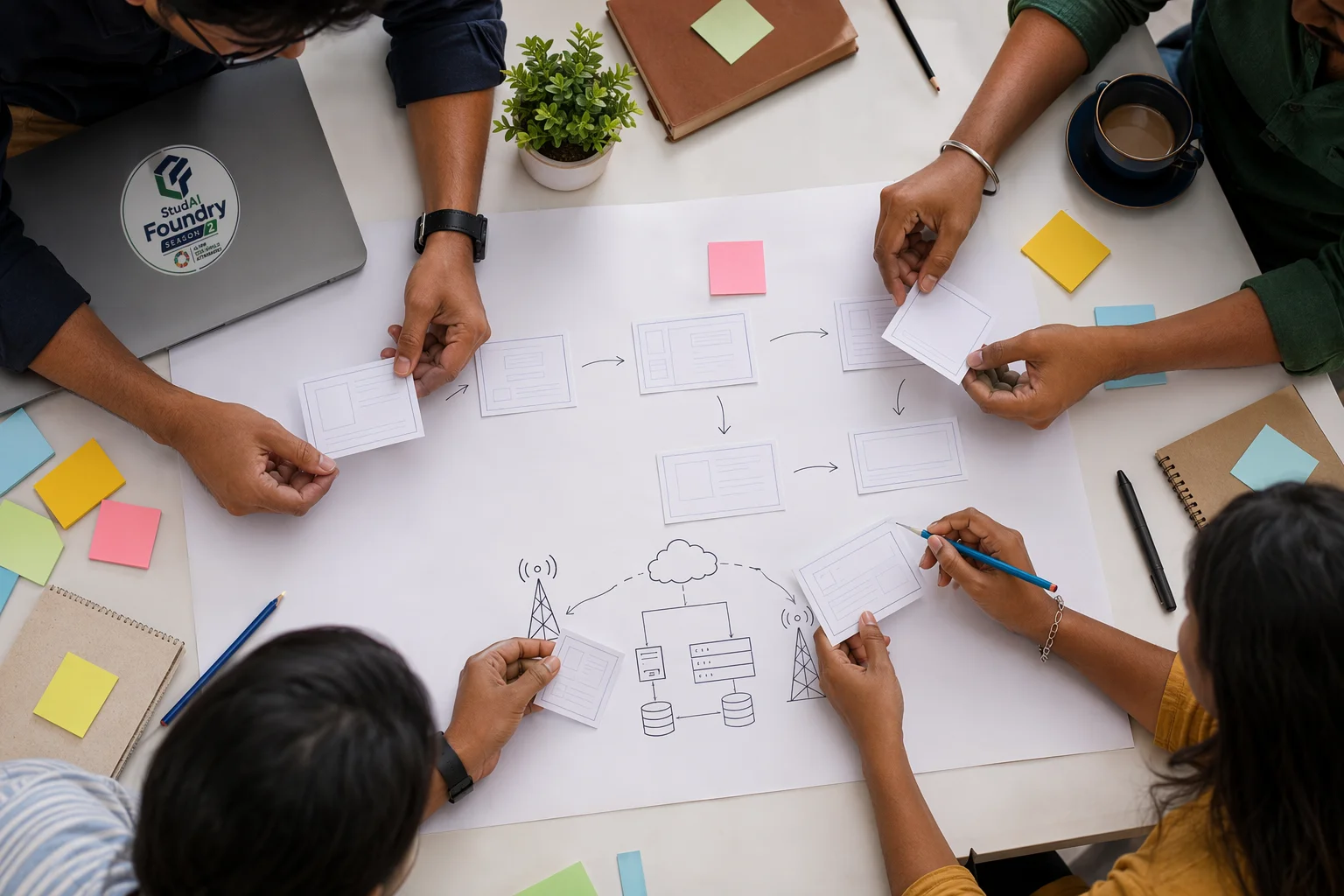
A one-day hackathon compresses everything — understanding, design, building, pitching — into 24 sleepless hours, then judges the noise. Foundry spreads the same journey across weeks and evaluates each stage on its own terms. Teams define a problem and get feedback before they design. They design and get feedback before they build. By the time a team demos at a physical final, its solution has survived three rounds of structured scrutiny and improved through each.
The three stages are called locks: Define, Design, Prove. Locks open progressively, each with its own submission requirements and its own published rubric. No team is eliminated by a lock — the locks exist to make every team better, and the full body of evaluated work decides who reaches the finals.
The Model
Lock 1 · Define
Problem, users, evidence, SDG alignment, AI opportunity and expected impact — scored across seven criteria with specific improvement recommendations.
Lock 2 · Design
Solution blueprint, user journey, architecture, AI approach, data plan, responsible-AI plan and impact metrics — including scored improvement from Lock 1.
Lock 3 · Prove
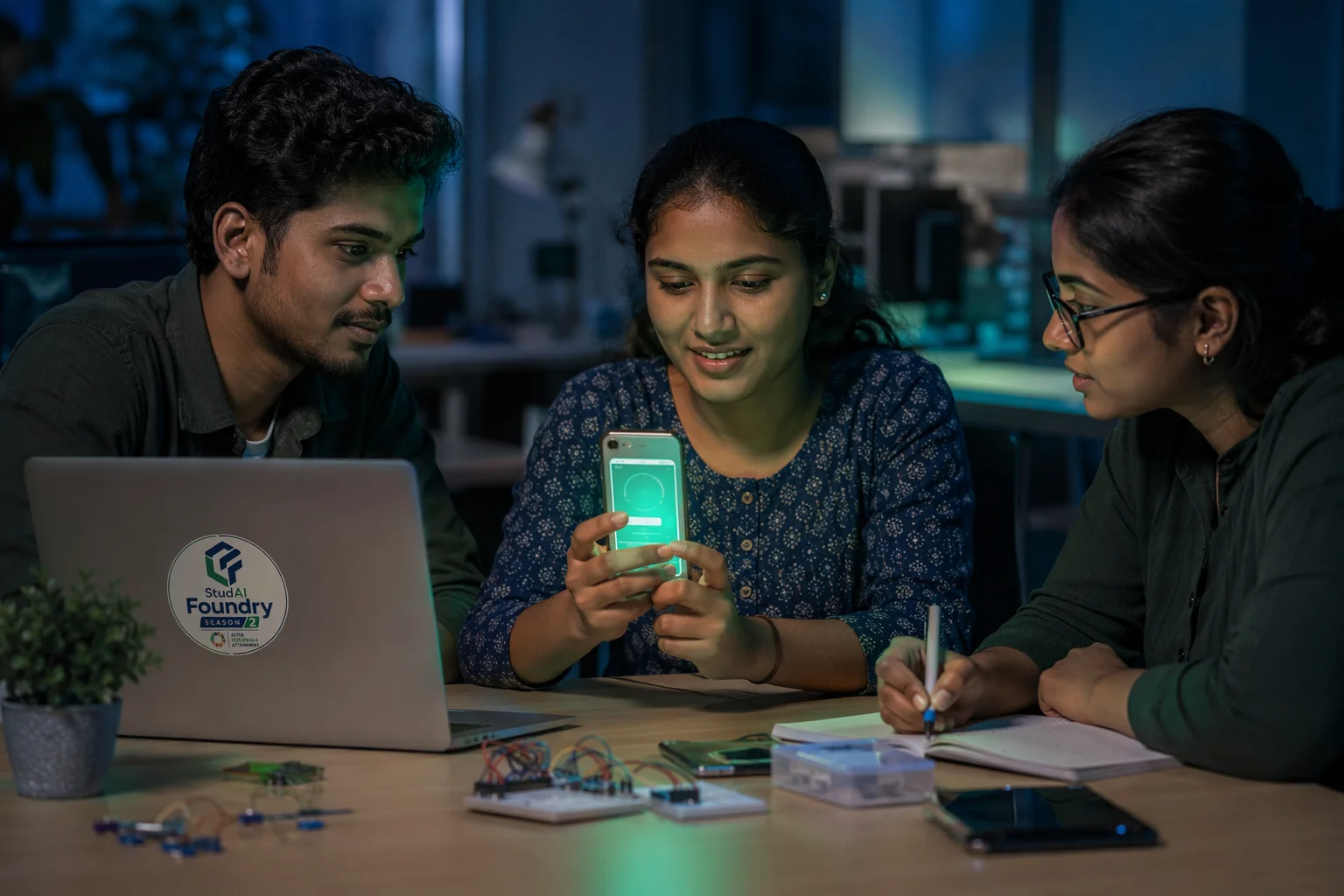
Working prototype, GitHub repository, demo video, live link, contribution declaration and honest limitations. The heaviest-weighted stage.
Selection
AI recommendation, human verification and moderation for score variance produced the Season 2 finalist lineup for RIT.
Final
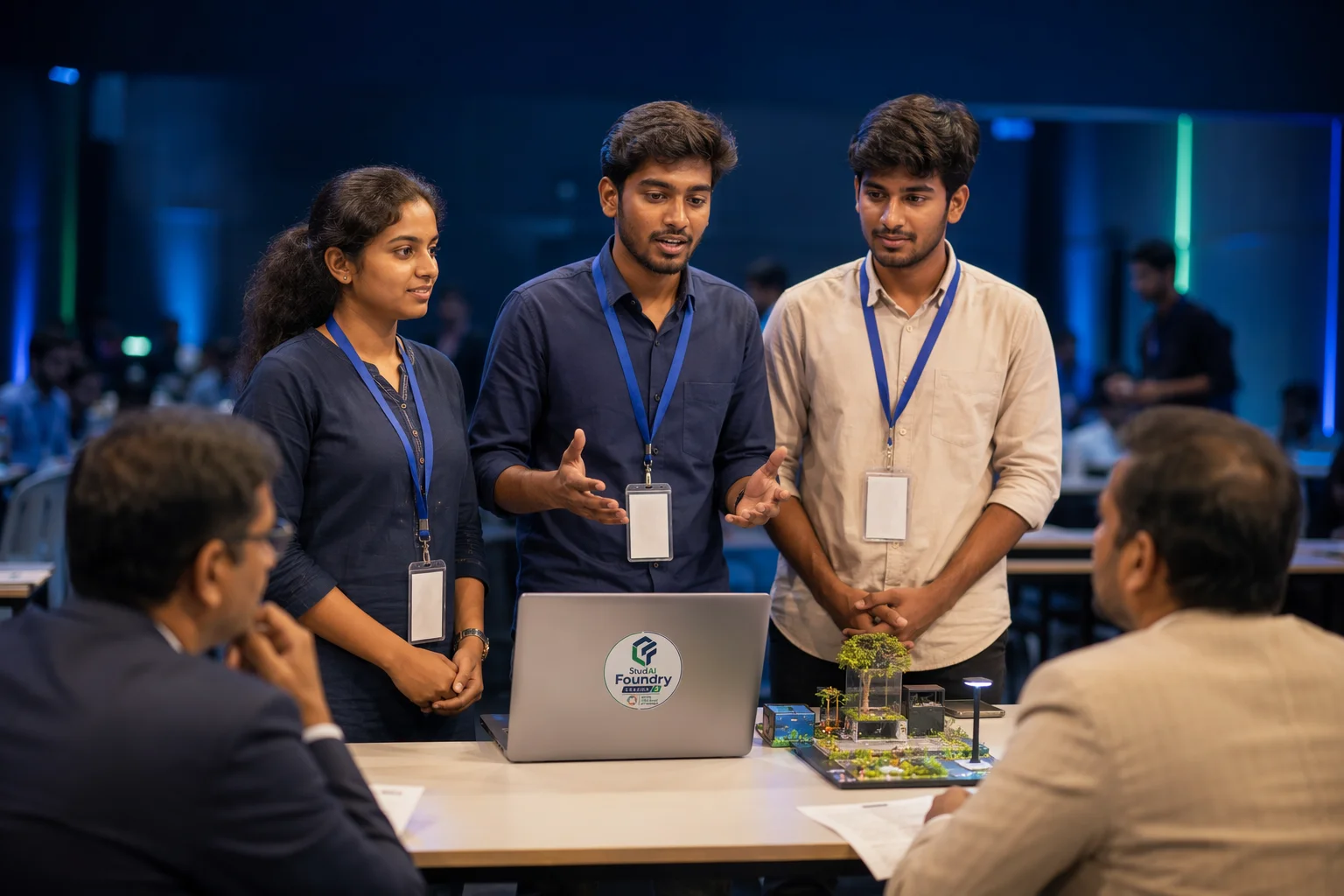
In-person demonstrations before a jury in Chennai, with a ₹1,00,000 prize pool.
Accountability
Every criterion and weight is readable before you submit. Nothing is scored that was not announced.
Each lock returns strengths, weaknesses and recommendations per criterion — feedback specific enough to act on.
People verify the decisions that matter. AI never independently selects finalists or winners.
When AI and human scores disagree significantly, the case routes to moderation automatically.
Who Foundry Serves
Beyond the Event
Foundry’s structure is deliberately the same shape as real product work: evidence, design, build, measure. Teams finish the season with assets that continue working for them — a repository with a genuine commit history, an architecture that survived review, measured pilot results and a project showcase entry. Some projects continue as products, some as research, some as portfolios that open doors. The season ends; the proof does not.
The Chennai final was held on 28 August 2026. Registration is no longer available.
View Season 2