Season 2 registrations are open — Chennai · 28 August 2026 and Coimbatore · 25 September 2026.

Register Your Team

Sustainable Development Goal 17 / 17

Partnerships for the Goals

Strengthen the means of implementation and revitalise global partnership for sustainable development. For builders: tools that help organisations working on the goals find each other, share data and prove collective impact.
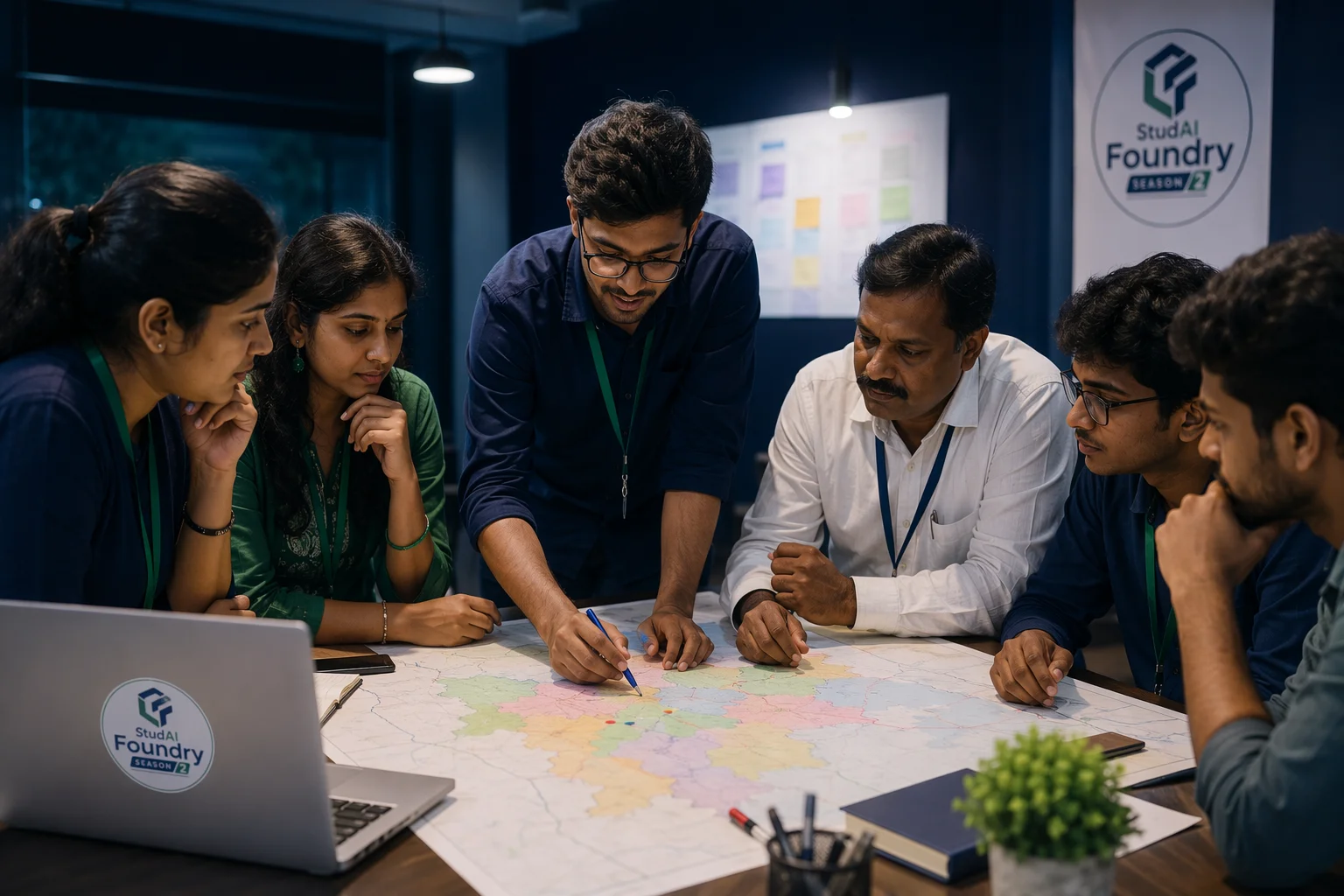
NGO workers, students and an official planning together around a district map table.

Why this goal matters

No single organisation solves an SDG. Progress happens when governments, NGOs, funders, researchers and communities coordinate — and coordination is exactly what fails most often. Duplicate programmes run streets apart; data sits in silos; small NGOs spend scarce hours on reporting instead of work. Coordination infrastructure is unglamorous and enormously valuable.

The Indian context

India’s development ecosystem is vast: millions of registered non-profits, CSR obligations moving thousands of crores annually, government missions at every level, and a growing digital-public-infrastructure philosophy (Aadhaar-adjacent rails, UPI, open networks) that shows what shared protocols can unlock. The collaboration layer between all of these actors remains thin.

Tamil Nadu, specifically

Tamil Nadu’s dense civil society — student NSS units, rotary networks, professional volunteer groups, active CSR from the state’s industrial base — means most causes have many actors and little shared visibility. Campus ecosystems in Chennai and Coimbatore are natural coordination nodes that student builders understand better than anyone.

People and communities affected

  • Small NGOs drowning in reporting overhead
  • Volunteers unable to find effective placements
  • CSR teams seeking credible local partners
  • Researchers needing field partnerships
  • Communities served by fragmented programmes

Key challenge areas

  • Partner discovery and due diligence
  • Volunteer-skill matching
  • Shared impact measurement
  • Funding-programme alignment
  • Open-data collaboration tooling

The AI Lens

Where AI belongs here — and where it does not.

Where AI can meaningfully help

  • Matching CSR mandates to verified grassroots programmes by geography and cause
  • Skill-based volunteer matching that respects availability reality
  • Harmonising differently formatted programme reports into comparable impact data
  • Detecting duplicate or overlapping interventions in the same geography

Where AI may be inappropriate

  • Rating NGOs on opaque criteria that gatekeep funding
  • Impact scores that flatten qualitative community work into misleading numbers
  • Extracting community data upward without value returning downward

Build Directions

Example problem directions

Starting points, not prescriptions — the strongest submissions narrow one of these into a specific, evidenced local problem.

Direction 01

A district development map that layers who-does-what-where from public registrations and consented self-reporting

Direction 02

A volunteer-matching platform for campus communities tuned to skills, causes and honest time commitments

Direction 03

A reporting copilot for small NGOs: enter data once, generate every funder’s format

Direction 04

A CSR-to-grassroots bridge with transparent, published matching criteria

Potential users

  • NGOs and community-based organisations
  • CSR and foundation teams
  • Student volunteer programmes
  • District administrations

Possible datasets

  • NGO Darpan public registrations
  • Published CSR spending disclosures (MCA data)
  • SDG India Index indicators (public)
  • Consented programme data from your pilot partners

Data-access limitations

  • Registration data says an organisation exists, not that it is active or effective
  • Impact data is self-reported and non-standardised across the sector
  • Geographic coding of programmes is inconsistent everywhere

Privacy, bias and safety risks

  • Bad due-diligence signals can defund good grassroots work — false negatives have victims
  • Coordination platforms die without a cold-start strategy; plan real seed partners
  • Data-sharing without governance burns trust across an entire ecosystem

Responsible-AI considerations

  • Publish matching and any rating criteria openly
  • Consent-based, reciprocal data sharing — every contributor gets value back
  • Human review before anything affects funding decisions

Suggested impact metrics

  • Verified partnerships or placements formed through the tool
  • Reporting hours saved per partner organisation, measured
  • Coverage: share of active local actors represented in the pilot geography

Build for Partnerships for the Goals.

Anchor your team in this goal, define one real problem, and start the three-lock journey.

Register Your Team