Season 2 at RIT
- Venue
- Rajalakshmi Institute of Technology
- Date
- 28 August 2026
- Prize Pool
- ₹1,00,000
Season 2 · Rajalakshmi Institute of Technology · 28 August 2026
StudAI Foundry Season 2 brought builders to Rajalakshmi Institute of Technology, Chennai, after a rigorous Define, Design and Prove journey. Teams transformed meaningful SDG problems into working AI solutions and demonstrated them before the jury.

Chennai final · 28 August 2026
StudAI Foundry Season 2 edition details: Season 2 at RIT at Rajalakshmi Institute of Technology on 28 August 2026. Prize pool: ₹1,00,000.
Beyond the Prize · StudAI Hire
Most competitions end with a certificate. Foundry ends with proof — three evaluated reports, a real repository and a working product. StudAI Hire, StudAI One’s talent platform, carries that proof into what comes next.
Track 01
Recruiters read claims all day. Foundry gives them something better: your evaluated build history. Through StudAI Hire, consenting participants surface their strongest evidence to hiring opportunities.
Track 02
Evidence of a real problem, a reviewed architecture, a measured pilot — that is a pre-seed story, not a college project. The Foundry showcase and StudAI One’s ecosystem put validated projects in front of the people who fund and incubate them.
Track 03
Season 2 demonstrated what happens when builders keep working after the first idea: stronger evidence, sharper architecture and solutions ready to be shown on stage.
Opportunities through StudAI Hire are earned on evidence. Participation creates the proof — it does not guarantee placement or funding, and consent controls what is ever shared.
Why Foundry Exists
A typical ideathon asks you to present a slide deck and wait. Foundry asks you to build — and gives you structured feedback at every stage so your solution is stronger each time you submit.
The Three-Lock Journey
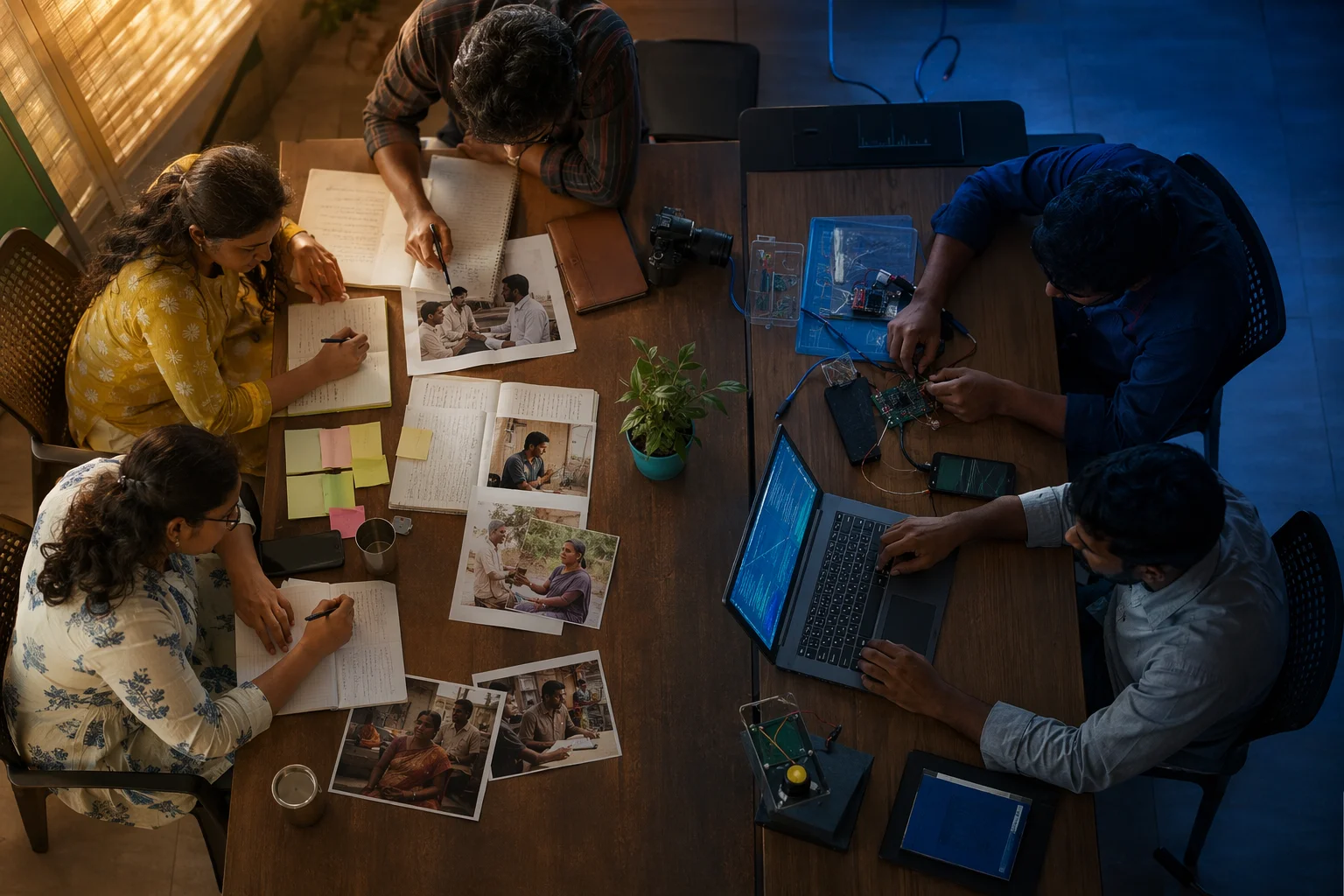
Three progressive online submission locks shaped the journey to the RIT final. Each lock produced a structured evaluation report, helping teams improve from problem definition to a working demonstration.
AI recommendation Human verification Physical-final selection Full journey details
The Grand Final at RIT
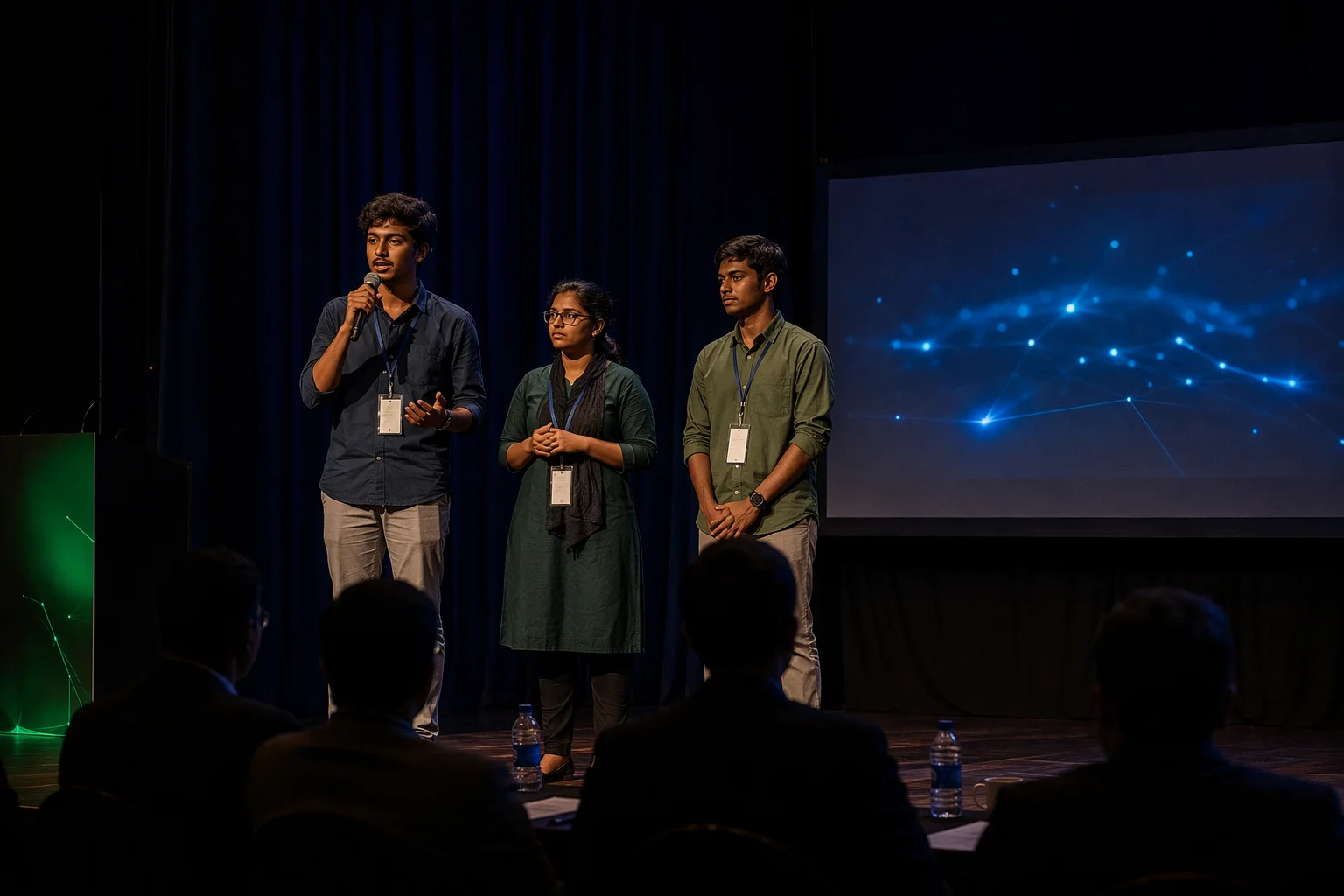
On 28 August 2026, Season 2 culminated at Rajalakshmi Institute of Technology, Chennai. Finalists demonstrated working solutions, answered the jury and celebrated a season of disciplined building.
Chennai final · 28 August 2026
StudAI Foundry Season 2 edition details: Season 2 at RIT at Rajalakshmi Institute of Technology on 28 August 2026. Prize pool: ₹1,00,000.
AI for SDG Goals Attainment
Every Foundry project addresses a real problem mapped to the UN Sustainable Development Goals. The SDG must be relevant — not decorative. AI must play a meaningful role, impact should be measurable, and safety and responsible use are evaluated, not assumed.
Challenge Areas
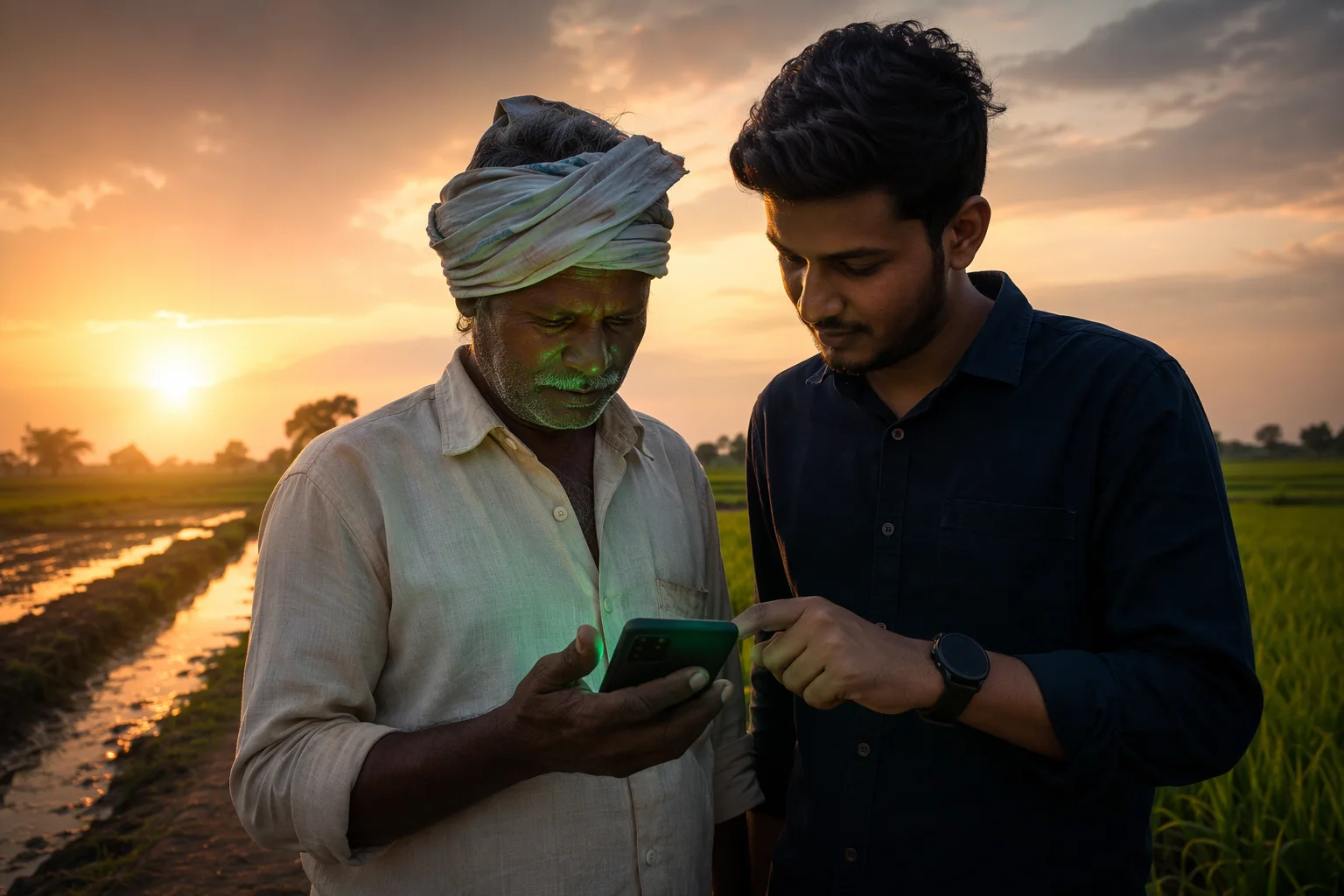
Challenge areas group related SDGs into practical build directions. Pick a family, then go deep on one specific, well-evidenced problem.
Preventive care access, early screening support, mental-health tools, hospital operations and community health-worker enablement.
Learning support for low-resource classrooms, assistive tools for disabled learners, skill assessment and teacher enablement.
Crop-health monitoring, yield planning, market access for smallholders and post-harvest waste reduction.
Early-warning systems, adaptation planning, conservation monitoring and climate-risk awareness tools.
Waste systems, water management, safe mobility, civic reporting and resilient urban infrastructure.
Skill matching, gig-worker protection, micro-entrepreneur tooling and fair access to work.
Benefit-scheme discovery, credit access for the underserved, fraud protection and financial literacy.
Service-delivery transparency, grievance routing, multilingual citizen access and institutional efficiency.
Safety and reporting tools, bias detection in access to opportunities, and inclusion for marginalised communities.
Circular-economy tooling, energy awareness, supply-chain transparency and waste-stream intelligence.
Who Can Participate
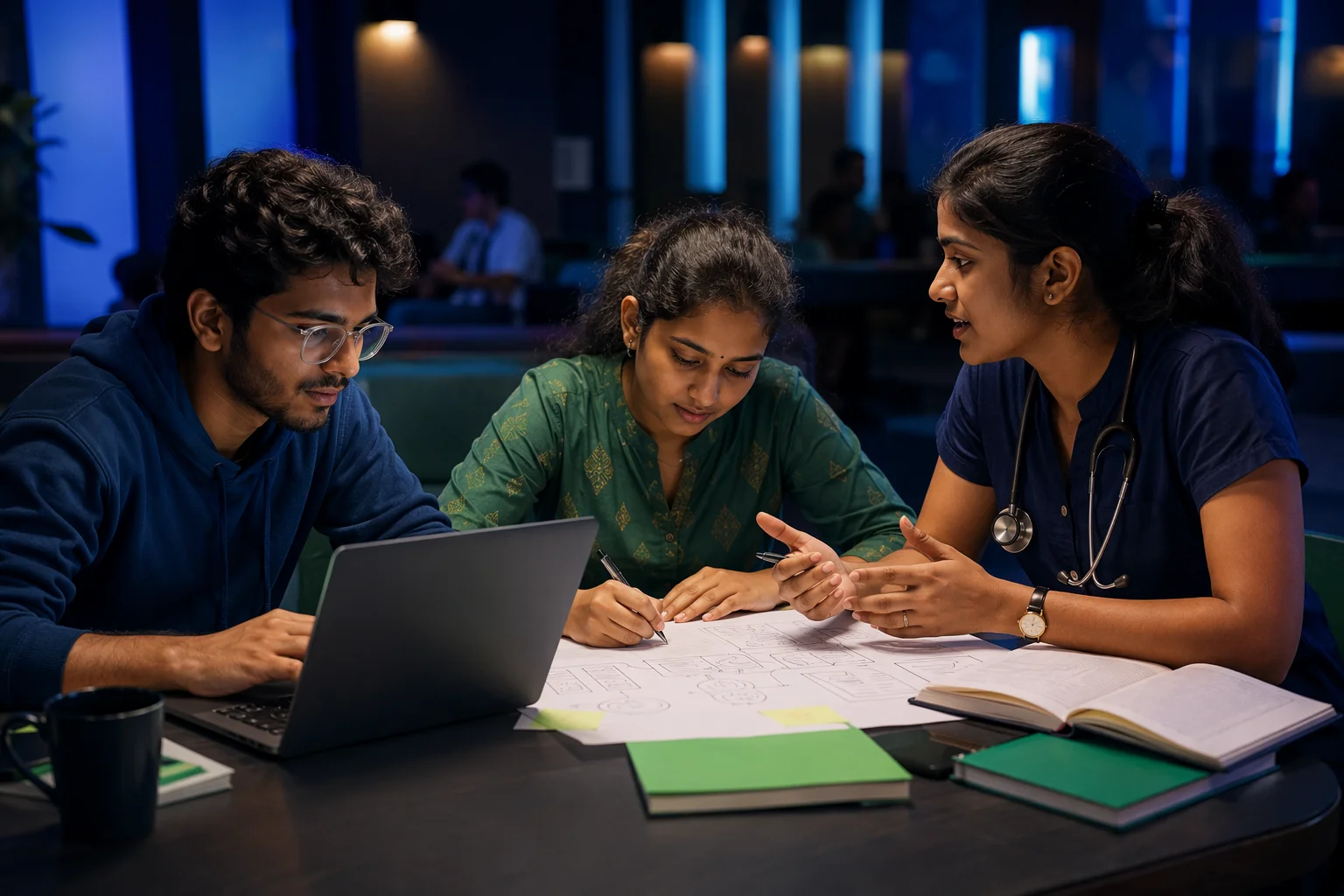
Foundry is not only for computer science students. Strong teams mix technical depth with domain understanding.
You do not need a perfect solution to begin. You need:
What Teams Built and Earned
Season 2 gave teams a complete structured build experience, with actionable feedback and proof of work that remains useful beyond the final.
Finalists earned their place at RIT through the evaluated build journey and human verification.
AI Evaluation, Human Accountability
Every submission is scored against a transparent rubric. AI produces the criterion-level report; humans stay accountable for the decisions that matter.

Lock 1 — Define
Sample Team · FND-S2 · sample report
78 / 100
Strength: the problem statement is specific and local. Improve: quantify how many people are affected, citing your source.
Strength: two user conversations documented. Improve: add evidence from an operator or authority perspective.
Strength: the goal-target mapping is genuine, not decorative.
Improve: explain why AI outperforms a simpler rule-based approach for this problem.
Strength: the framing differs from existing government helpline solutions.
Improve: name the datasets you can actually access in the build window.
Improve: define one measurable impact metric you could demonstrate by Lock 3.
Jury Panel
The Season 2 jury brought technical, product, impact and responsible-AI perspectives to the final. Jurors examined what teams could demonstrate, explain and defend — not just how polished a presentation looked.
Season 2 Juror
AI Product Developer & Founder evaluating innovation, feasibility, practical application and real-world impact.
Product
The strength of the real problem, the clarity of the user journey and evidence that the solution could be used.
Impact
Meaningful SDG alignment, measurable outcomes and an honest account of who benefits and how.
Trust
Safety, bias, privacy, limitations and whether teams understood the consequences of deploying their approach.
Prize and Recognition
The Chennai edition awarded winners from its ₹1,00,000 pool. Beyond the money, finalists presented in person to a jury and joined the Foundry showcase.
Built on Accountability
Season 2 combined published rubric weights, criterion-level AI feedback and human accountability. Rajalakshmi Institute of Technology hosted the final stage where selected teams demonstrated what they had built.
Every lock is scored against criteria you can read before you submit — nothing is hidden.
AI recommends; people decide. Every physical-final selection passes human review.
Large AI-versus-human score differences automatically route a team to moderation.
The physical final ran inside a real, named institution — not a rented banner venue.
People Behind the Success
Season 2 succeeded through committed teams, practical mentor guidance, accountable evaluation and the support of Rajalakshmi Institute of Technology as host.
Explore the Season 2 JourneyBuild
Teams worked through feedback, refined their decisions and arrived at RIT with demonstrable solutions.
Guide
Mentors asked the difficult questions that helped teams move from rough concepts to stronger products.
Verify
Published criteria, human review and declared conflicts kept important decisions responsible.
Host
Rajalakshmi Institute of Technology gave Season 2 its physical stage and final-day setting.
Partners and Hosts
Rajalakshmi Institute of Technology hosted the successful Season 2 physical final in Chennai.
Chennai Edition Host
Hosted the Chennai physical final on 28 August 2026.
Questions
Students from any discipline, working professionals and independent innovators. Teams have 1–3 members. You do not need to be a computer science student — strong teams mix technical skill with domain understanding.
Season 2 registration and payment collection are closed. Existing participants can sign in to review their team and payment history.
No. Payment gives every team the complete three-lock build experience with AI evaluation reports. Physical-final selection is earned through the evaluated locks and human review — it is never bought.
Access to all three build locks, a structured submission journey, AI evaluation reports with criterion-level improvement recommendations, responsible-AI guidance, participant resources, community access, participation recognition and the opportunity to qualify for a physical final.
Contact the organiser about mixed-institution teams and the applicable payment category before paying. Teams have 1–3 members.
Each lock is scored by AI against a transparent rubric, producing criterion-level strengths, weaknesses and recommendations. Human evaluators verify important decisions, and large AI-versus-human score differences automatically trigger moderation. AI never independently decides the winners.
Season 2 · RIT Chennai · Grand Success
The season is complete, but the work remains: evaluated projects, stronger builders and a final at Rajalakshmi Institute of Technology that turned months of effort into a grand success.
Explore the Season 2 Story